
You may also like:
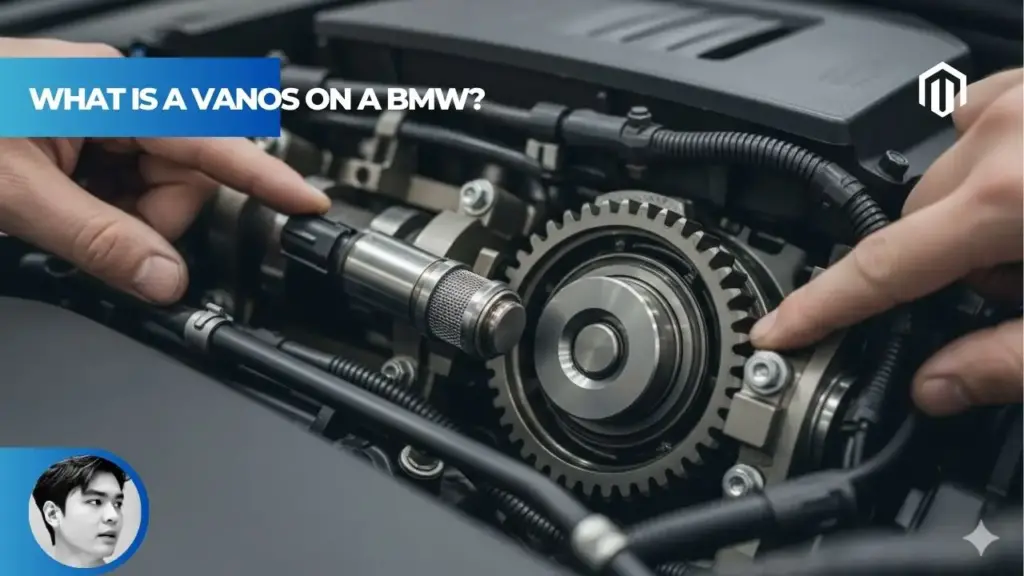
VANOS is BMW’s variable valve timing system that adjusts when your engine’s intake and exhaust valves open and close[1]. The German acronym stands for “Variable Nockenwellensteuerung” (variable camshaft control). BMW has used this technology since 1992 to improve power delivery, fuel efficiency, and emissions across different driving conditions[2].
How BMW’s VANOS System Works
The VANOS system uses oil pressure to rotate the camshaft position relative to the engine’s drive gear[1]. This rotation changes when valves open and close—a process called “cam phasing.” By advancing or retarding valve timing, the engine can optimize performance for whatever you’re doing: cruising, accelerating, or idling.
Here’s the basic mechanics: a solenoid (controlled by the engine’s computer) routes oil through passages inside the VANOS unit[2]. This oil pressure moves a helical gear that sits between the cam gear and camshaft. As the gear moves in or out, its angled teeth change the camshaft’s rotational position. The result? Valve timing that adapts in real-time to your driving.
The ECU (engine control unit) constantly monitors throttle position, engine speed, oil pressure, and load to determine optimal valve timing[2]. At idle, the system might retard timing for smoother operation. During hard acceleration, it advances timing for maximum power. This happens automatically—you never notice it working until something goes wrong.
BMW isn’t unique here. Honda calls their version VTEC, Toyota uses VVT-i, and Nissan has VVEL[2]. Every major automaker has developed some form of variable valve timing because the benefits are substantial: better power across the rev range, improved fuel economy, and reduced emissions.
Types of BMW VANOS Systems
BMW has evolved its VANOS technology through several generations[1].
| System | Years | Description |
|---|---|---|
| Single VANOS | 1992-1996 | Controls intake camshaft only |
| Double VANOS | 1996-present | Controls both intake and exhaust camshafts |
| Double VANOS + Valvetronic | 2001-present | Adds variable valve lift control |
Single VANOS
The original system only adjusted the intake camshaft timing[1]. It first appeared in the M50 engine powering the E34 5 Series. Single VANOS improved torque and efficiency compared to fixed-timing predecessors, but the technology was limited—exhaust timing remained static.
Double VANOS
Starting with the S50 engine in 1996, BMW added a second unit to control the exhaust camshaft[2]. Double VANOS provides continuous variability on both sides, allowing far more precise optimization. Most BMWs on the road today—including the N52, N54, N55, and B58 engines—use some version of double VANOS.
Double VANOS with Valvetronic
BMW took things further in 2001 by adding Valvetronic, which varies how far the valves open (valve lift), not just when they open[1]. This combination eliminates the throttle body restriction found in conventional engines, improving efficiency and throttle response. You’ll find this setup in N52, N54, and later engines.
If you’re curious about other BMW engine technologies, these systems work together to deliver the driving experience BMW is known for.
Signs of a Failing BMW VANOS System
VANOS problems typically show up gradually[1]. You might not notice your car underperforming until the system fails significantly—especially if you’ve never experienced it working properly.
Loss of Power Below 3,000 RPM
This is the most common symptom[1]. VANOS optimizes low-end torque, so failure hits hardest in the lower rev range. Your car feels sluggish from a stop, lacks the punch it used to have during normal acceleration, and seems to “wake up” only at higher RPM. During a recent test drive of a high-mileage 335i, the difference before and after VANOS solenoid replacement was striking—the car gained noticeable torque below 3,000 RPM.
Rough Idle and Engine Hesitation
The engine stumbles at idle or hunts between RPMs (typically 500-700)[2]. You might feel the car shaking at stoplights or notice the tachometer needle bouncing slightly. This happens because improper valve timing causes uneven combustion events.
Poor Fuel Economy
When valve timing isn’t optimized, the engine burns more fuel than necessary[1]. A 10-15% decrease in fuel economy often accompanies VANOS issues. If your BMW’s fuel consumption has increased without explanation, VANOS might be involved.
Cold Start Problems
Faulty VANOS solenoids often cause hard starting in cold weather[2]. The engine might crank longer than normal, stumble when first catching, or stall shortly after startup. Cold oil flows poorly through gunked-up solenoids, exacerbating the problem.
Check Engine Light and Fault Codes
The ECU monitors VANOS operation and throws codes when problems arise[1]. Common fault codes include:
| Code | Meaning |
|---|---|
| 2A82 | VANOS intake solenoid malfunction |
| 2A87 | VANOS exhaust solenoid malfunction |
| P1520 | Camshaft position actuator, exhaust |
| P1523 | Camshaft position actuator jammed |
| P0012 | Camshaft position timing over-retarded |
If your check engine light appears, getting codes read is the first step toward diagnosis. An OBD2 scanner costs around $30-50 and can save you a $100+ diagnostic fee at a shop.
Why VANOS Systems Fail
VANOS components wear out over time, and certain factors accelerate failure[1].
Worn Seals
The rubber O-rings inside VANOS units degrade with heat cycling and age[1]. Once seals wear down, oil pressure can’t build properly to move the helical gear. Seal failure typically starts around 50,000 miles and becomes significant by 70,000-80,000 miles. Replacing seals is relatively inexpensive ($50-100 in parts) if caught before the entire unit fails.
Clogged Solenoids
Oil sludge and debris accumulate inside VANOS solenoids over time[1]. Clogged solenoids can’t route oil properly, causing timing issues. Using quality oil and following BMW’s change intervals helps prevent this. Cleaning solenoids is a 30-minute DIY that can restore function temporarily.
Dirty Oil and Poor Maintenance
The VANOS system depends on clean oil at proper pressure[2]. Extended oil change intervals or using incorrect oil specifications accelerate wear. BMW’s recommended 10,000-mile oil change intervals are aggressive—many specialists recommend 5,000-7,500 miles for turbocharged engines.
Understanding proper BMW maintenance practices helps prevent premature VANOS failure.
VANOS Repair Costs
Repair costs vary significantly based on what’s actually failing[3].
| Repair Type | Cost Range |
|---|---|
| VANOS solenoid cleaning | Free (DIY) – $150 (shop) |
| VANOS solenoid replacement | $150-$400 |
| VANOS seal kit replacement | $200-$600 |
| Full VANOS unit rebuild | $800-$1,500 |
| Complete VANOS unit replacement | $1,500-$3,000+ |
The catch? Many shops jump straight to expensive repairs when cleaning or seal replacement would solve the problem[1]. Getting a proper diagnosis before authorizing major work saves money.
For solenoid replacement, quality matters[1]. Cheap Amazon solenoids ($30 each) often fail quickly. Febi and Pierburg solenoids ($60-100 each) offer better longevity and are considered superior to even OEM parts by many BMW technicians.
Maintenance Tips to Extend VANOS Life
Prevention is significantly cheaper than repair[1].
Change oil more frequently than BMW recommends. The 10,000-mile interval works for warranty purposes, but 5,000-7,500 miles with quality synthetic oil helps keep VANOS solenoids and seals healthy. Use BMW-approved oil specifications (LL-01 or LL-04) only.
Clean your VANOS solenoids at 50,000 miles. It’s a straightforward DIY involving removing the solenoids, spraying them with brake cleaner, and reinstalling[1]. This preventative step takes 30 minutes and costs almost nothing.
Consider replacing seals around 70,000 miles even without symptoms[1]. Beisan Systems and Dr. VANOS make quality seal kits that restore original function. The $100-200 investment prevents more expensive failures later.
Drive the car spiritedly occasionally. Extended gentle driving allows carbon buildup[1]. Regular drives at higher RPM help burn off deposits and keep oil flowing through VANOS passages.
Key Takeaways
- VANOS is BMW’s variable valve timing system that optimizes when intake and exhaust valves open and close, improving power delivery, fuel efficiency, and emissions across all driving conditions[1].
- The system uses oil pressure controlled by solenoids to rotate camshaft position in real-time—the ECU constantly adjusts timing based on throttle position, engine load, and RPM[2].
- Common failure symptoms include loss of power below 3,000 RPM, rough idle, poor fuel economy, cold start problems, and check engine lights with specific VANOS fault codes[1].
- VANOS seals typically wear out around 50,000-70,000 miles, with solenoid issues becoming common past 80,000 miles—preventative maintenance extends system life significantly[1].
- Repair costs range from free (DIY solenoid cleaning) to $3,000+ (complete unit replacement)—accurate diagnosis is crucial to avoid overpaying for repairs[3].
- Frequent oil changes (5,000-7,500 miles rather than BMW’s 10,000-mile recommendation) and periodic solenoid cleaning at 50,000 miles are the best preventative measures[1].
FAQs
Can I drive my BMW with a bad VANOS?
Yes, but it’s not ideal[1]. A failing VANOS won’t leave you stranded immediately—the car will run, just poorly. You’ll experience reduced power, worse fuel economy, and rough operation. The bigger risk is continued driving causing additional wear on related components. If you’re getting VANOS fault codes, address them within a few weeks rather than months.
How long does BMW VANOS last?
Most VANOS systems show wear around 50,000-70,000 miles, with significant issues common between 80,000-120,000 miles[1]. Proper maintenance extends life considerably—some owners report trouble-free operation past 150,000 miles with diligent oil changes and preventative solenoid cleaning. The seals typically fail first, followed by solenoid wear.
Is VANOS repair expensive?
It depends on what needs replacing[3]. Solenoid cleaning is nearly free if done yourself. Solenoid replacement runs $150-400. Full VANOS unit rebuilds cost $800-1,500, while complete unit replacement can exceed $2,000-3,000 including labor. Getting an accurate diagnosis prevents paying for unnecessary repairs—a $150 solenoid replacement solves many issues that get quoted as $2,000 jobs.
What happens if VANOS completely fails?
Complete VANOS failure causes severe drivability issues[2]. The engine will run very rough, lose significant power (especially at low RPM), and likely enter limp mode. Fuel economy drops dramatically, and the car may stall frequently. Unlike some engine problems, VANOS failure typically doesn’t cause catastrophic damage—but the car becomes unpleasant to drive. In rare cases with mechanical jam codes, continued driving can damage camshaft timing components.
References
-
BMW Tuning. (2024). Diagnosing a Failing BMW VANOS System.
Diagnosing a Failing BMW VANOS System – When to Repair Your BMW VANOS
-
Motor Werke. (2022). BMW’s VANOS System and Common Issues Explained.
BMW’s VANOS System and Common Issues Explained
- Bumper. (2025). BMW Vanos System Failure Cost Guide. https://www.bumper.co/blog/bmw-vanos-system-failure-cost
- Turning Wrenches. (2020). Signs of VANOS System Failure in BMWs. https://turning-wrenches.com/signs-of-vanos-system-failure-in-bmws/

I am a senior automotive analyst at Autvex. Expert vehicle evaluations, in-depth reviews, and objective analysis helping readers make informed automotive decisions with years of industry experience.