You may also like:
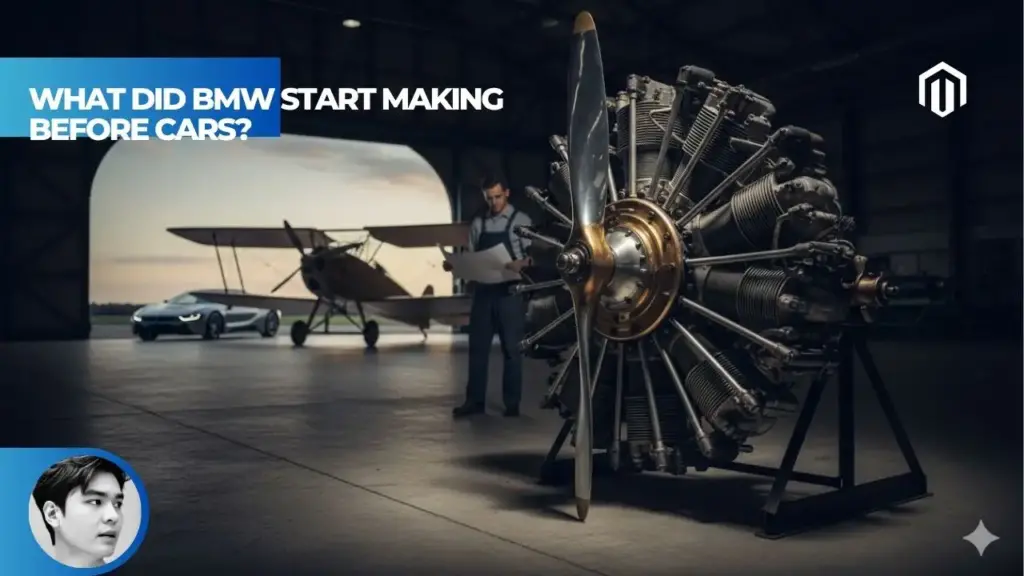
BMW manufactured aircraft engines before making cars[1]. Founded in 1916 as an aircraft engine company during World War I, BMW’s first product was the BMW IIIa—a straight-six engine that powered German fighter planes[2]. After the war banned German aircraft production, BMW pivoted to motorcycles in 1923 with the R32, then finally entered automobile manufacturing in the late 1920s by acquiring the Dixi car company[3].
BMW’s Aircraft Engine Origins
BMW wasn’t always about “The Ultimate Driving Machine.” The company started life building engines for the sky.
Founding in 1916
Bayerische Motoren Werke—literally “Bavarian Motor Works”—was established in 1916 as Rapp Motorenwerke[1]. After founder Karl Rapp departed in April 1917, the company was renamed to BMW[2].
The timing wasn’t accidental. World War I created enormous demand for aircraft engines, and Germany needed alternatives to the Daimler-Benz engines that then dominated military aviation[4]. BMW stepped into this gap.
The BMW IIIa Engine
BMW’s first major product was the IIIa—a straight-six aircraft engine designed by engineer Max Friz in spring 1917[2]. This engine became famous for two things: fuel efficiency and high-altitude performance[1].
| Specification | BMW IIIa |
|---|---|
| Configuration | Inline 6-cylinder |
| Designer | Max Friz |
| Year | 1917 |
| Notable Feature | High-altitude performance |
The IIIa powered German military biplanes[5]
In 1918, a BMW-powered biplane reached 5,000 meters altitude in just 29 minutes—an impressive feat for its day[6]. The engine’s reliability and efficiency made it the preferred choice for German military aircraft, including the legendary Fokker D.VII fighter plane[3].
What BMW Made After WWI
The Treaty of Versailles changed everything. Germany lost the war—and the right to build military aircraft engines[1].
The Transition Period
BMW didn’t close shop. Between 1918 and 1923, the company survived by making:
- Motorcycle engines for other manufacturers
- Agricultural equipment
- Household items
- Railway brakes[2]
Not exactly glamorous. But BMW was biding its time, waiting for an opportunity to apply its engineering expertise to new products.
Motorcycles: The 1923 R32
That opportunity came in 1923. At the Berlin Motor Show, BMW unveiled its first complete vehicle: the R32 motorcycle[7].
The R32 was revolutionary. Designed by the same Max Friz who created the IIIa aircraft engine, it featured a 494cc flat-twin “boxer” engine with cylinders mounted horizontally[8]. This layout improved balance and cooling—and it remains a signature BMW motorcycle design over 100 years later.
| Feature | BMW R32 (1923) |
|---|---|
| Engine | 494cc flat-twin (boxer) |
| Power | 8 horsepower |
| Drive | Shaft drive (not chain) |
| Designer | Max Friz |
| Production | 1923–1925 |
The boxer engine layout still defines BMW motorcycles today[8]
What made the R32 special wasn’t just the engine. The shaft-driven system was easier to maintain than chains or belts, and all parts likely to need repair were encapsulated—a thoughtful design touch that set BMW apart from competitors[7].
BMW’s Entry Into Automobile Manufacturing
Motorcycles were successful, but BMW wanted more. The late 1920s brought cars.
The Dixi Acquisition
In 1928, BMW acquired Fahrzeugfabrik Eisenach, a company that manufactured the Dixi 3/15[3]. The Dixi was a licensed version of the British Austin Seven—a small, affordable car.
This wasn’t exactly a prestige debut. The Dixi was basic transportation, not a luxury vehicle. But it gave BMW a foothold in automobile manufacturing and, more importantly, the manufacturing know-how to develop its own designs.
From Humble Beginnings to The M Series
Fast forward nearly a century, and BMW builds everything from the compact 2 Series to luxury flagships like the 7 Series and electric vehicles like the iX. The company’s reputation for “driver’s cars” traces directly back to that aviation DNA—powerful, efficient engines designed for performance.
World War II: Back to Aircraft Engines
BMW’s aviation chapter wasn’t over. When Germany rearmed in the 1930s, BMW returned to aircraft engine production[2].
The BMW 801 and Jet Engines
The company produced the BMW 801—a high-performance radial engine that powered the Focke-Wulf 190A fighter plane[5]. BMW manufactured over 61,000 units of this engine through the war[5].
BMW also developed early jet engines, including the BMW 003, producing over 500 units by war’s end[2]. But this period carries a dark history: BMW used forced labor from concentration camps, with nearly 50% of the 50,000-person workforce consisting of prisoners by 1945[2].
Does BMW Still Make Airplane Engines?
No. After WWII, BMW exited aviation permanently. The company’s aircraft engine subsidiary, BMW Flugmotorenbau GmbH, was disbanded, and BMW focused entirely on automobiles and motorcycles[2].
Today, if you want a BMW product, you’re buying a car, SUV, or motorcycle—not an airplane engine.
The BMW Logo: Does It Represent a Propeller?
Here’s a common misconception. Many people believe BMW’s blue-and-white logo represents a spinning propeller—a nod to the company’s aviation roots[4].
The reality? The logo design comes from the Bavarian flag, which features blue and white checkered patterns[4]. “Bayerische” literally means “Bavarian,” so the colors are a regional reference, not an aircraft reference.
That said, BMW hasn’t discouraged the propeller myth. It’s a compelling story that connects the brand to engineering heritage and high-performance origins. Marketing gold, even if not technically accurate.
BMW Timeline: From Aircraft to Automobiles
| Year | Milestone |
|---|---|
| 1916 | Company founded as Rapp Motorenwerke |
| 1917 | Renamed to BMW; BMW IIIa aircraft engine released |
| 1918 | BMW engine powers biplane to 5,000m in 29 minutes |
| 1919 | Treaty of Versailles bans German aircraft production |
| 1923 | BMW R32 motorcycle debuts at Berlin Motor Show |
| 1925 | R37 motorcycle wins racing competitions |
| 1928 | BMW acquires Dixi, enters automobile market |
| 1930s | Returns to aircraft engines during German rearmament |
| 1945 | Exits aviation; refocuses on cars and motorcycles |
Key milestones in BMW’s transition from aircraft to automobiles[2][3]
How Aviation Shaped BMW’s Car Philosophy
BMW’s aircraft origins still influence the brand. The emphasis on engine performance, efficient power delivery, and engineering precision all trace back to building engines that needed to perform flawlessly at altitude.
When BMW enthusiasts talk about “driving feel” or the company’s inline-six engines, they’re describing a philosophy born in 1917—make the engine the star, and engineer everything else around it.
Key Takeaways
- BMW was founded in 1916 as an aircraft engine manufacturer, with the BMW IIIa straight-six engine as its first major product—it powered German WWI fighter planes[1][2].
- After WWI banned German aircraft production, BMW pivoted to motorcycles in 1923 with the R32—featuring the flat-twin boxer engine that still defines BMW motorcycles today[7].
- BMW didn’t enter automobile manufacturing until 1928 when it acquired the Dixi car company, meaning motorcycles and aircraft engines both preceded BMW cars[3].
- The company briefly returned to aircraft engine production during WWII, building over 61,000 BMW 801 radial engines and early jet engines—but exited aviation permanently after 1945[2][5].
- BMW’s blue-and-white logo represents the Bavarian flag, not a spinning propeller—though the aviation myth has become part of brand folklore[4].
FAQs
What was BMW’s first product?
BMW’s first product was the BMW IIIa aircraft engine, a straight-six designed by Max Friz and released in 1917[2]. The engine powered German military biplanes during World War I and was known for its fuel efficiency and high-altitude performance.
When did BMW start making cars?
BMW entered automobile manufacturing in 1928 when it acquired Fahrzeugfabrik Eisenach, which produced the Dixi 3/15—a licensed version of the British Austin Seven[3]. This acquisition gave BMW its first car production capability.
Did BMW make motorcycles before cars?
Yes. BMW produced its first motorcycle—the R32—in 1923, five years before entering the car market[7]. The R32’s flat-twin boxer engine design remains a BMW motorcycle signature to this day.
Does the BMW logo represent a spinning propeller?
No—despite popular belief. The BMW logo’s blue and white colors come from the Bavarian flag, not from a spinning propeller[4]. “Bayerische” means “Bavarian,” and the company chose colors representing its home region in southern Germany.
Does BMW still make aircraft engines?
No. BMW exited the aviation industry after World War II and has since focused exclusively on automobiles, motorcycles, and related mobility products[2]. The company no longer manufactures any aircraft or aircraft components.
References
- Complete Car Care. (2024). The Evolution of BMW From Aircraft Engines to Luxury Cars. https://completecarcare318.com/blog/the-evolution-of-bmw-from-aircraft-engines-to-luxury-cars
- Wikipedia. History of BMW. https://en.wikipedia.org/wiki/History_of_BMW
- Automobilisto. (2024). BMW – Brand History. https://automobilisto.de/en/stories/bmw
-
Motozite. (2025). History of BMW: From Aircraft Engines to Luxury Icons.
History of BMW: From Aircraft Engines to Luxury Icons
- SlashGear. (2024). Did BMW Really Make Airplane Engines (And Does It Still)? https://www.slashgear.com/1686411/did-bmw-make-airplane-engines/
- P&W BMW of Pittsburgh. History of BMW. https://www.bmwofpittsburgh.com/history-of-bmw.htm
- BMW Group. BMW Group History. https://www.bmwgroup.com/en/company/history.html
- RunMotoRun. (2025). History of BMW Motorrad. https://www.runmotorun.com/bmw/history-of-bmw-motorrad

I am a senior automotive analyst at Autvex. Expert vehicle evaluations, in-depth reviews, and objective analysis helping readers make informed automotive decisions with years of industry experience.