You may also like:
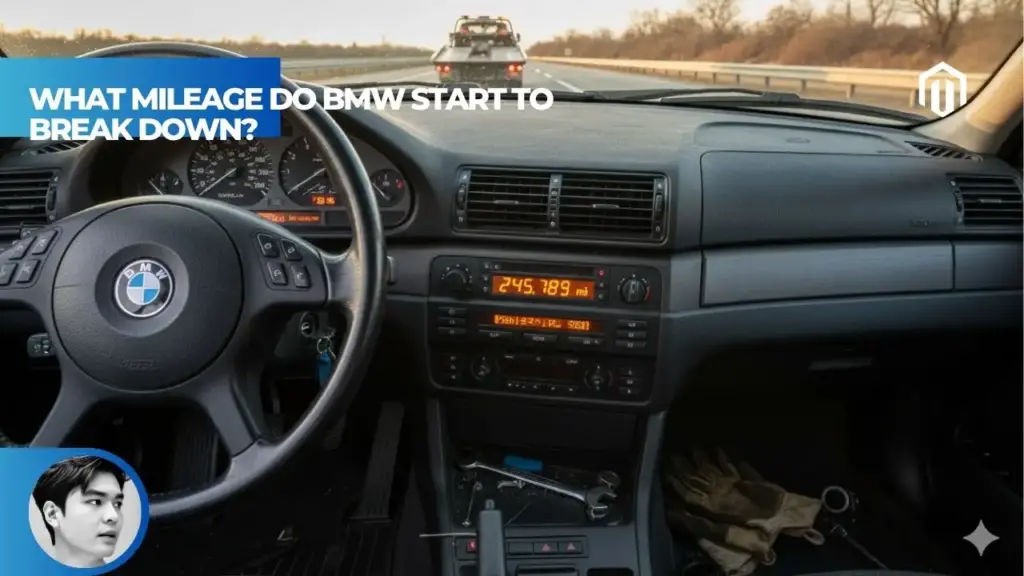
Most BMWs begin experiencing significant issues between 80,000 and 120,000 miles, though this varies considerably by model and maintenance history.[1] Well-maintained examples can reach 200,000 to 250,000 miles, while neglected vehicles—particularly early V8 X5 models—may start breaking down as early as 60,000 miles.[1]
Why 80,000–120,000 Miles Is the Trouble Zone
BMW engineers prioritize performance, comfort, and technology over pure durability.[2] That trade-off catches up with most vehicles somewhere in the 80,000 to 100,000-mile range. The cooling system, electrical components, and various seals simply weren’t designed to last forever.
Here’s the reality: modern BMW engines themselves can be remarkably robust. The N54 turbo engine, for example, has recorded turbos lasting over 200,000 miles in some cases.[1] But the supporting systems—gaskets, sensors, water pumps, and plastic cooling components—tend to fail first. These aren’t catastrophic failures, but they’ll hit your wallet hard if you’re not prepared.
A BMW 3 Series costs approximately $14,345 in maintenance and repairs during its first 10 years, according to CarEdge data.[3] That’s $4,655 more than the luxury sedan average. And here’s the kicker: there’s a 41.71% chance of a major repair by year 10, climbing to 77.82% by year 12.[3]
The Three Most Common High-Mileage Problems
BMW vehicles share several common failure points that tend to surface once the odometer climbs. Understanding these helps you budget for repairs—or walk away from a bad deal.
Oil Leaks and Gasket Failures
Oil leaks rank among the most predictable BMW problems after 80,000 miles.[4] The valve cover gasket, oil filter housing gasket, and oil pan gasket are the usual culprits. These aren’t cheap fixes—accessing some gaskets requires pulling the intake manifold, which means labor costs add up fast.[5] You’ll notice spots in your driveway or smell burning oil when the engine heats up. If you’re checking your oil regularly, you’ll catch low levels before they cause engine damage.
Cooling System Failures
The cooling system is BMW’s Achilles’ heel. Water pumps, thermostats, expansion tanks, and radiators use plastic components that become brittle over time.[6] One owner reported the cooling fan literally exploding at 60,000 miles, destroying the radiator and belts in the process.[6] That’s extreme, but cooling failures are common enough that experienced BMW owners treat these components as scheduled maintenance items rather than “if it breaks” repairs. Learn how to tell if your car is overheating to avoid catastrophic engine damage.
Electrical Gremlins
High-mileage BMWs develop electrical quirks ranging from minor annoyances to serious problems.[4] Battery drain, malfunctioning sensors, and compromised wiring connections become more frequent past 100,000 miles.[7] The iDrive system may freeze, reboot unexpectedly, or stop responding entirely.[7] Intermittent failures are particularly frustrating because they’re difficult to diagnose and expensive to chase down.
BMW Reliability by Series
Not all BMWs age equally. Some models earn reputations for durability while others become money pits.
| Series | Average Lifespan | Notable Issues |
|---|---|---|
| 3 Series (E46, E90) | 200,000–300,000 miles | VANOS issues, cooling system |
| 5 Series | 150,000+ miles | Transmission, electronics |
| 7 Series | 200,000 miles | Air suspension (fails ~100k), complex electronics |
| X5 (early V8) | Problems start ~60,000 miles | Timing chain, transfer case |
| X6 (2025) | J.D. Power 85/100 reliability | Fewest owner-reported faults |
Sources: GearShifters[2], J.D. Power[8]
The E46 and E90 3 Series have proven capable of exceeding 300,000 miles with proper care.[1] On the flip side, early V8-powered X5 models earned a reputation for breaking down around 60,000 miles—well before most owners expected trouble.[1] The 2025 BMW X3 and X6 currently rank among the most dependable choices for buyers prioritizing reliability.
How BMW Compares to Competitors
BMW’s reliability sits below average when stacked against the broader market.[9] The 2025 J.D. Power Initial Quality Study recorded 196 problems per 100 BMWs—worse than the industry average of 192.[9] That said, BMW outperformed its German rivals: Mercedes logged 210 problems per 100 vehicles, while Audi finished dead last at 269.[9]
Consumer Reports tells a different story, ranking BMW second in overall brand reliability for 2025 with a score of 78, trailing only Subaru.[10] The contradiction highlights how different methodologies—initial quality versus long-term dependability—can produce wildly different conclusions. If you’re cross-shopping, our Audi Q5 vs BMW X3 comparison and BMW vs Mercedes reliability breakdown offer deeper analysis.
Annual Maintenance Costs by Mileage
BMW ownership costs escalate sharply as mileage accumulates. The first few years feel manageable—then the bills start climbing.
| Year | Annual Maintenance Cost | Major Repair Probability |
|---|---|---|
| 1 | $581 | 4.13% |
| 3 | $850 | 7.68% |
| 5 | $1,311 | 19.50% |
| 7 | $1,904 | 23.65% |
| 10 | $2,154 | 41.71% |
| 12 | $2,511 | 77.82% |
Source: CarEdge BMW 3 Series data[3]
RepairPal puts annual BMW maintenance at $968—significantly higher than the $652 industry average.[11] For a complete breakdown, see our guide on BMW maintenance costs. These figures assume you’re using independent shops rather than dealership service, which typically costs 30–50% more.
Extending Your BMW’s Lifespan
The difference between a BMW that dies at 100,000 miles and one that reaches 250,000+ comes down to maintenance habits. Owners who hit high mileage consistently follow certain practices.
Change oil more frequently than BMW recommends. The factory interval of 10,000–15,000 miles is aggressive for longevity. Many long-term owners switch to 5,000–7,500 mile intervals—some even go as short as 3,000 miles.[12] Yes, it costs more. It also prevents the sludge buildup and wear that kills engines. For oil capacity information, check your owner’s manual or our detailed guides.
Address problems immediately. Small issues become expensive disasters when ignored. A minor coolant leak becomes a warped head gasket. A check engine light becomes a failed catalytic converter. BMW repairs are expensive enough without compounding them.
Replace cooling system components proactively. Many experienced owners replace the water pump, thermostat, and expansion tank together around 80,000 miles, even if everything still works.[6] It’s cheaper than an emergency repair—and far cheaper than the engine damage a cooling failure can cause. Use only BMW-approved coolant to avoid premature component failure.
What to Look for When Buying a High-Mileage BMW
Shopping for a used BMW? The sweet spot for value often falls right in that 80,000–120,000 mile danger zone, where prices drop but problems haven’t necessarily materialized yet.[1]
Demand complete service records. A BMW with documented dealer or specialist maintenance at every interval is worth significantly more than one with gaps. No records? Assume the worst and price accordingly.
Get a pre-purchase inspection from a BMW specialist—not a general mechanic. They’ll catch the model-specific issues that others miss. Budget $150–300 for this; it’s the best insurance against buying someone else’s problems.
Look for recent cooling system work. If the water pump, thermostat, and hoses have been replaced, you’ve dodged a major expense. If they haven’t, factor $1,500–2,500 into your budget.
Check for oil leaks around valve covers and the oil filter housing. Some seepage is normal on higher-mileage examples, but active drips signal immediate repair needs. For more guidance on how many miles is good for a used car, we’ve written extensively on the topic.
Key Takeaways
- BMWs typically begin experiencing significant issues between 80,000 and 120,000 miles, though well-maintained examples regularly exceed 200,000 miles with the right care.[1]
- Oil leaks, cooling system failures, and electrical problems represent the three most common high-mileage concerns across virtually all BMW models.[4]
- Annual maintenance costs rise from around $580 in year one to over $2,500 by year twelve, with major repair probability exceeding 75% at that point.[3]
- The 3 Series offers among the best long-term durability, while early V8 X5 models have the worst reputation for premature failures.[1]
- Changing oil more frequently than BMW recommends and replacing cooling components proactively are the two most effective ways to extend your BMW’s lifespan.[12]
FAQs
Can a BMW last 300,000 miles?
Yes, certain BMW models—particularly the E46 and E90 3 Series—have reached 300,000 miles with diligent maintenance.[1] Achieving this requires religious adherence to service schedules, proactive replacement of wear items, and using quality parts and fluids. The engine and transmission can handle the mileage; it’s typically the supporting systems that determine longevity.
Why do BMWs have a reputation for being unreliable?
BMW prioritizes driving dynamics, technology, and luxury over long-term durability.[2] The brand uses sophisticated systems that perform brilliantly but require more frequent (and expensive) maintenance than simpler competitors. Additionally, BMW’s extended service intervals—while convenient—may contribute to premature wear when owners follow them exactly rather than servicing more frequently.
At what mileage should I avoid buying a used BMW?
There’s no universal cutoff, but caution increases significantly past 100,000 miles unless the vehicle comes with comprehensive service records showing proactive maintenance.[1] A well-documented 150,000-mile BMW from a single owner who addressed issues promptly is often a better buy than a 70,000-mile example with unknown history.
Is BMW worse than Mercedes for reliability?
J.D. Power’s 2025 Initial Quality Study recorded 196 problems per 100 BMWs versus 210 for Mercedes-Benz, making BMW slightly more reliable by that measure.[9] Both brands rank below the industry average. Lexus leads the luxury segment with 166 problems per 100 vehicles.
References
-
GearShifters. (2022). What Mileage Do BMW Start To Break Down?
What Mileage Do BMW Start To Break Down?
-
GearShifters. (2022). How Long Can A BMW Engine Last?
How Long Can A BMW Engine Last?
- CarEdge. (2024). BMW 3 Series Maintenance Schedule and Costs. https://caredge.com/bmw/3-series/maintenance
-
Wheels Greed. (2025). Common BMW Issues at High Mileage.
Common BMW Issues at High Mileage
- Exotic Car Playplace. (2022). Why BMW’s Won’t Last 100,000 Miles. YouTube.
-
Reddit r/cars. BMW Reliability Discussion.
Why do i hear about BMW's lasting 150k+ miles with little to no maintenance from some people, and then other people spending thousands even before the car hits 100k miles?
byu/dont_ama_73 incars - Portland Motor Works. (2025). 5 Most Common Electrical Issues on High-Mileage BMWs. https://portlandmotorworks.com/blog/
- Speedme. (2025). Most Reliable BMW Models for 2025, Ranked by J.D. Power. https://speedme.ru/
- BMW Blog. (2025). 2025 J.D. Power Initial Quality Study Puts BMW Below Average. https://www.bmwblog.com/2025/06/29/
-
Auto Times News. (2025). The Most Reliable BMW Models Of 2025 – Based On Real Owner Data.
Home
- MarketWatch. (2026). How Much Does BMW Maintenance Cost? https://www.marketwatch.com/
- YouTube. (2026). Why BMWs DON’T Reach 500000 Miles.

I am a senior automotive analyst at Autvex. Expert vehicle evaluations, in-depth reviews, and objective analysis helping readers make informed automotive decisions with years of industry experience.