You may also like:
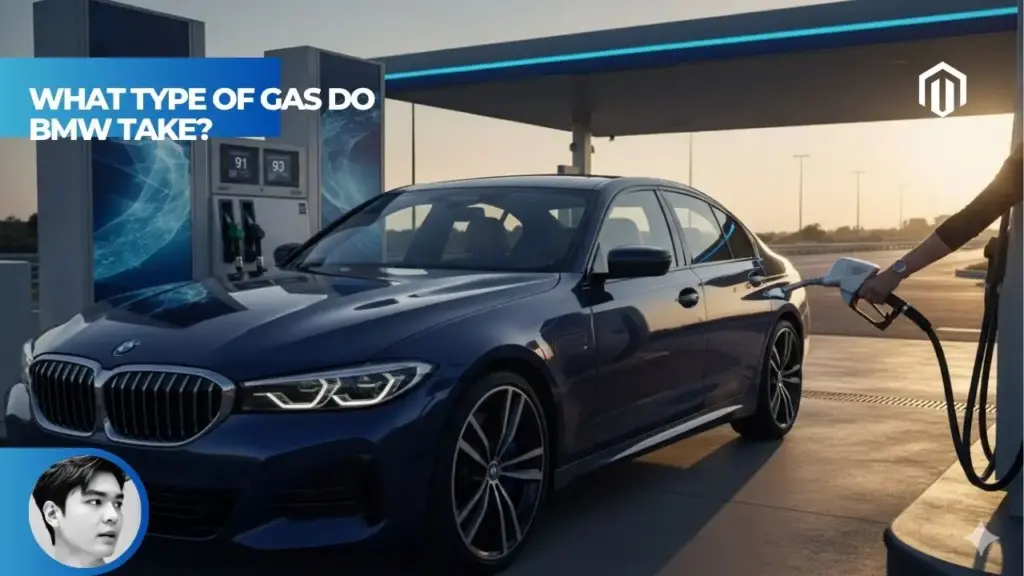
BMW vehicles require premium unleaded gasoline with an octane rating of 91 or higher for optimal performance.[1] While most modern BMWs can technically run on regular 87-octane fuel without immediate damage, doing so reduces power output, hurts fuel economy, and isn’t recommended for long-term use.[2]
Why BMW Recommends Premium Fuel
The answer comes down to engineering. BMW builds high-compression, turbocharged engines designed to extract maximum power from every drop of fuel. These engines squeeze the air-fuel mixture much harder than standard vehicles, creating more pressure in the combustion chamber.[3]
Octane measures a fuel’s resistance to premature ignition. Higher octane means the fuel can withstand more compression before igniting. When you put 87-octane regular gas in an engine tuned for 91-octane premium, the fuel may ignite before the spark plug fires—a phenomenon called “knocking” or “pinging.”[4] That metallic rattling sound isn’t just annoying. It signals your engine is under stress.
Modern BMWs have knock sensors that detect this premature combustion and retard the ignition timing to compensate.[2] The engine protects itself, but at a cost: reduced horsepower, slower acceleration, and worse fuel economy. You’re paying less at the pump while getting less from your car.
Fuel Requirements by BMW Model Type
Not every BMW runs on gasoline. The lineup now includes pure electric vehicles, plug-in hybrids, and even diesel options in some markets. Here’s what each type needs.
| Powertrain Type | Fuel Requirement | Examples |
|---|---|---|
| Standard Gasoline | 91+ octane premium unleaded | 3 Series, 5 Series, X3, X5 |
| M Performance | 91+ octane (93 recommended) | M3, M4, M5, X3 M |
| Plug-in Hybrid (PHEV) | 91+ octane + electricity | X5 xDrive50e, 330e |
| Pure Electric | Electricity only | i4, iX, i7, i5 |
| Diesel (select markets) | Ultra-low sulfur diesel | X5 xDrive40d |
Source: BMW owner’s manuals and dealer recommendations[1][5]
For the 2025 BMW 3 Series and X3, premium 91-octane is the baseline recommendation. M Performance variants like the M3 benefit from 93-octane when available, as these hand-built engines produce substantial horsepower under extreme compression.
What Happens If You Use Regular Gas in a BMW?
One tank won’t destroy your engine. But here’s what actually happens when you fill up with 87-octane regular.
Reduced Power Output
BMW’s engine management system detects the lower-octane fuel and adjusts timing to prevent knock. The trade-off? Less power.[4] BMW of Tenafly notes that regular gas “can stress the car’s electronic knock sensors, impair performance, reduce acceleration, and decrease power.”[4] You’ll feel it when merging onto highways or climbing steep grades.
Worse Fuel Economy
This seems counterintuitive—you’re saving money on cheaper gas, right? The catch: your engine works harder to produce the same results. Many owners report the MPG drop from using regular gas essentially negates the per-gallon savings.[6] The math rarely works in your favor.
Long-Term Risks
BMW of Birmingham states that “using regular gas long-term may result in reduced performance and fuel efficiency compared to using premium gas as recommended.”[2] Occasional use won’t cause immediate damage, but consistent use stresses engine components over time. And here’s the kicker—if an engine issue develops and BMW determines you’ve been running improper fuel, warranty coverage could be affected.[6]
Understanding Octane Ratings
Fuel octane ratings confuse many drivers. Premium isn’t “better” fuel—it’s different fuel designed for specific engines.
In the United States, you’ll typically see three grades at the pump. Regular sits at 87 octane, mid-grade at 89, and premium at 91-93 depending on region and brand.[4] Some stations, particularly in high-altitude areas, may offer slightly different ratings.
The number represents the fuel’s resistance to compression ignition. An 87-octane fuel ignites more readily under pressure, which works fine in lower-compression engines. A 91-octane fuel resists ignition longer, allowing high-compression BMW engines to maximize their power stroke before combustion occurs.
What about 93-octane? For most BMWs, 91 is sufficient. M Performance models and heavily modified vehicles may extract additional performance from 93-octane fuel, but the everyday 5 Series or X1 won’t notice a meaningful difference between 91 and 93.
BMW Electric Vehicles: A Different Fuel Story
Electric BMWs don’t need gas at all. The BMW i4, iX, i5, and i7 run entirely on electricity, eliminating fuel concerns altogether.
Charging these vehicles involves either AC (Level 2) charging at home or DC fast charging at public stations. The BMW iX, for example, can charge from 10% to 80% in under 40 minutes using a 200kW DC fast charger.[7] For home charging, most owners install a Level 2 charger that adds roughly 30 miles of range per hour.[8]
And yes, BMWs can now charge at Tesla Superchargers using the NACS adapter, expanding charging options significantly.
Plug-in hybrids like the X5 xDrive50e require both premium gasoline and electrical charging. The gas engine still demands 91-octane, but you’ll use significantly less of it if you charge regularly and drive shorter distances.
E85 and Flex Fuel: Can BMWs Run on Ethanol?
Stock BMWs are not designed for E85 ethanol fuel. Using high-ethanol blends without modifications can damage fuel system components, sensors, and potentially the engine itself.[9]
That said, aftermarket flex-fuel kits exist for many BMW models. These kits add an ethanol content sensor and modify the fuel injection to accommodate anywhere from standard 91-octane to pure E85.[9] Performance enthusiasts use these setups because E85’s higher octane rating (around 105) allows for more aggressive tuning and power gains—sometimes 20-30+ horsepower on modified vehicles.[10]
But for the average driver running a stock BMW, stick with premium gasoline. E85 compatibility requires specific hardware and often professional tuning.
Maximizing Fuel Efficiency in Your BMW
Premium fuel isn’t the only factor affecting your BMW’s efficiency. Several practices help you get the most from every tank.
Keep up with maintenance. A clogged air filter, worn spark plugs, or dirty fuel injectors all reduce efficiency. BMW’s service intervals exist for a reason—follow them. Our guide on BMW maintenance costs breaks down what to expect.
Check tire pressure monthly. Underinflated tires create rolling resistance that forces the engine to work harder. BMW’s tire pressure monitoring system alerts you to significant drops, but subtle underinflation often goes unnoticed.
Use the Eco Pro driving mode for daily commuting. It adjusts throttle response, climate control, and other systems to prioritize efficiency over performance. You won’t win any races, but you’ll extend your range between fill-ups.
And one thing most people overlook: consistent cruising speeds beat aggressive acceleration and braking. The turbocharged engines in modern BMWs respond quickly to throttle input, but that responsiveness costs fuel every time you floor it.
Key Takeaways
- BMW vehicles are designed for premium unleaded gasoline with an octane rating of 91 or higher, allowing the high-compression turbocharged engines to operate at full potential.[1]
- Using regular 87-octane gas won’t immediately damage a BMW, but the engine compensates by reducing power, which often negates any cost savings at the pump.[6]
- M Performance models like the M3, M4, and M5 benefit most from high-octane fuel, with some owners using 93-octane for maximum output.
- Electric BMWs (i4, iX, i5, i7) eliminate gasoline entirely, while plug-in hybrids require both premium fuel and regular charging for optimal operation.[7]
- Stock BMWs cannot run E85 ethanol without aftermarket flex-fuel modifications, though performance-tuned vehicles sometimes use these kits for power gains.[9]
- Following BMW’s fuel recommendation protects your warranty, maximizes resale value, and ensures the driving experience the engineers intended.
FAQs
Can I use 89-octane mid-grade gas in my BMW?
Mid-grade 89-octane falls between BMW’s recommendation of 91+ and the absolute minimum of 87. You’ll experience less power loss than with regular gas, but you’re still not giving the engine what it’s designed for. If premium is unavailable, mid-grade is a better short-term compromise than regular, but it shouldn’t be your standard choice.[2]
Will using premium gas improve a non-premium car’s performance?
No. If your vehicle is designed for 87-octane regular, using premium provides no benefit—the engine can’t take advantage of the higher octane rating.[6] You’re simply spending more money for no performance gain. Only use premium if your owner’s manual specifically recommends or requires it.
How do I know if my specific BMW model requires premium?
Check your owner’s manual or the fuel door sticker. BMW explicitly states fuel requirements for each model. Most gasoline BMWs will say “Premium Unleaded Fuel Only” or “91 Octane Minimum.” If you’ve lost your manual, BMW’s website and dealer service departments can confirm requirements for your VIN.
Does BMW require premium gas or just recommend it?
For most models, BMW “recommends” rather than “requires” premium fuel.[2] This means the engine can technically run on regular without immediate failure. That said, the recommendation exists because engineers designed the engine around premium fuel’s characteristics. Treating a recommendation as optional degrades performance and potentially shortens engine life.
References
- BMW of Lubbock. (2024). What Type of Fuel Do BMW Vehicles Use? https://www.bmwoflubbock.com/
- BMW of Birmingham. (2025). Do BMW SUVs Require Premium Gas? https://www.birminghambmw.com/
-
Nikolas Motorsport. (2025). Why Does BMW Recommend 91+ Octane Fuel for Its Vehicles?
Home
-
BMW Insights. Does A BMW Require Premium Gas?
Home
- BMW of Montgomery. (2025). What Happens if You Put Regular Gas in Your BMW X3? https://www.bmwofmontgomery.com/
- Reddit r/cars. BMW with regular gas? https://www.reddit.com/r/cars/
- BMW Vietnam. BMW Electromobility: BMW Charging. https://www.bmw.vn/
- BMW of Portland. BMW EV Charging & Benefits. https://www.bmwofportland.com/
- Tensility Motorsports. E85 Flex Fuel Kit – BMW. https://tensilitymotorsports.com/
- European Auto Source. APE – E85 FlexFuel Kit – BMW S52/S54. https://europeanautosource.com/

I am a senior automotive analyst at Autvex. Expert vehicle evaluations, in-depth reviews, and objective analysis helping readers make informed automotive decisions with years of industry experience.